Your cart is currently empty!

[
]
Welcome to Helen Robertson Jewellery and Knitting
Explore my collections of Shetland inspired jewellery. Join an online class to learn my specialised knitting techniques in wire and wool.
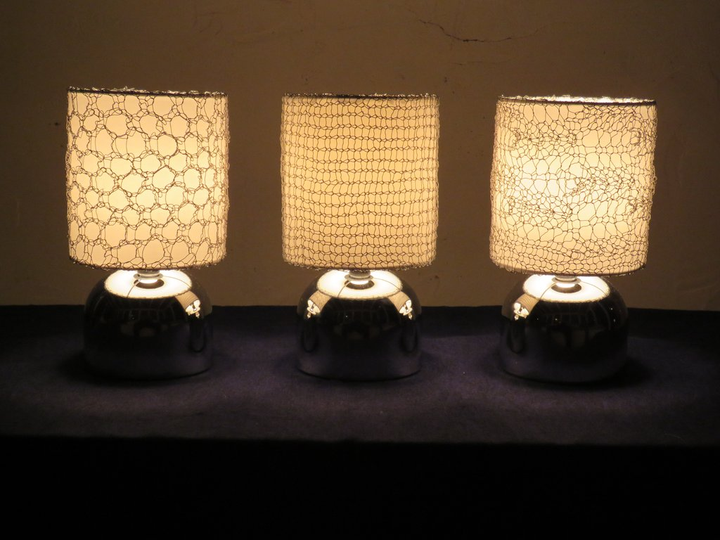
Browse the Jewellery
Textile Art
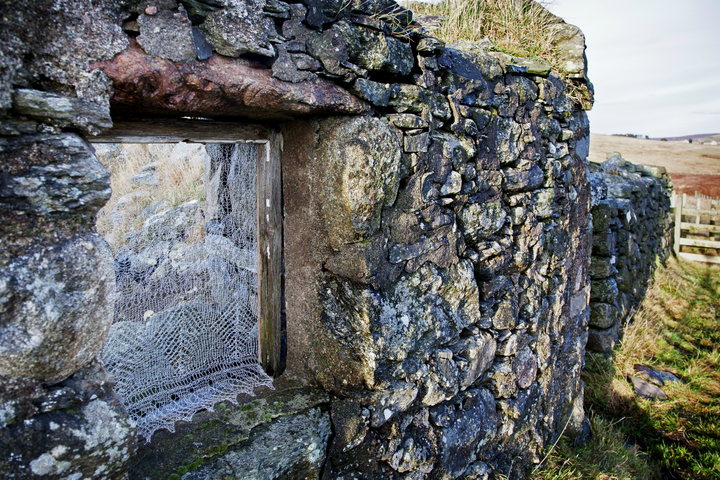
Putting Shetland Lace Knitting patterns back into the landscape that generated them.
From the blog
-
October 17, 2026
Tree of Life, Interrupted

The Tree of Life, Interrupted flag flies every year from the Lerick Town Hall on 29th May. This is the story behind it.
-
October 17, 2026
Bee Art - Ultima Thulbee

This project was inspired by the Shetland Bumble Bee, the work of Joseph Beuys, Michaelswood and the RSPB Species on the Edge project. It was funded by Shetland Arts Creative Shetland Commissioning Fund.
The Shetland Bumble Bee or Bombus Muscorum Agricolae, named after the Roman explorer who allegedly named Shetland Ultima Thule, is only found in Shetland and the Western Isles, it has a rich copper coloured body and is one of the RSPB Species on the Edge target species.
Joseph Beuys believed that everyone was an artist, and by how they lived their lives, could contribute to the art around them. He promoted communal working and responsible environmental interaction, he organised the planting of 7,000 trees in Kassel, Germany.
Michaelswood is a special woodland, planted and maintained in memory of Michael Ferrie by his family, Ray Betty and Alan. It has evolved into a significant community area and provides solace and society to many.
To celebrate all three, I devised a project that will knit and place 100 bees through Michaelswood.
The Thule (pronounced Thulee) is an old pub in Lerwick hence the name - Ultimate Thulbee. I aye lik a peerie fun!
The project included workshops in my shedio in knitting with wire and bee construction.

This was the plan, however the workshops were so popular I increased the number of worker bees per session and ran more sessions. We also had to abandon the vitreous enamel for safety and stability reasons but used gold and copper foil as alternatives.
More than 30 Worker Bees met in my hive in the north of Shetland that summer. It has been such a pleasure to meet fellow worker bees and to work together to create 100 life size Shetland Bees. Bees within hives have fixed roles; workers, drones and queens and have fixed jobs. I set our hive up so all the worker bees had a chance to try out different jobs making all the different parts although maybe not fulfilling all the roles!

Legs were cut from textured silver wire. Then ends were melted to create feet. Antennae were made from thin silver wire and the ends melted.

I'm very grateful to Cajsa who helped with the legs!
Wings are next, a tiny piece of lace knitting using Shetland Lace techniques and a single strand of 0.2mm silver wire. The actual bees have 4 wings but they look like 2, the smallest back wings are linked by tiny hooks to the front wings, we made each wing in one piece to look like so 2 looked like 4.
Creativity was encouraged but I did write a back up pattern using Shetland Lace techniques to create the mootie wings.


The bee bodies were made using air hardening clay and then knit around using 2 or 3 fine silver wires held together. The bodies could be knit flat or in the round depending on the preference of the knitter bees!

Then the bees were assembled by sewing in the wings and fastening on the legs and antennae.
 The final part was adding the copper and gold foil to replicate the gorgeous coppery back of the bee. These are images of some of the participants during some of the workshops. Most people made 1 bee.


The silver wire will naturally tarnish in time to a more realistic black. It is possible to speed up this process using acid but I like the idea of the bees interacting with the environment and aging in their own time.
The communal nature of the hive has been appreciated by all the worker bees so not only were they part of the workshop they were on but as they were using bodies and maybe wings made in previous weeks, they were making legs and bodies that were used in following weeks, it became a real community effort.

Then just 2 days before the scheduled Bee Day a strange and magical thing happened. Having been immersed in bee designing, recruiting, running workshops and making for months, I was sitting at my kitchen table having a cup of tea when an actual bee landed right next to my left hand. In the past I would have been terrified but with my new found love for bees I kept calm and made her a water sugar mix which she dined on. I was able to observe her up close and realised that we had made the antennae of our bees too long! Too late to change now! I will always treasure that still moment watching the peerie tired bee revitalised by a bit of care and some sugary water. Fly safe peerie guy!

Hive meets at 2pm.
The date for the hanging of the bees was set and adverts and posters shared. My favourite was the SIBC (Shetland Islands Broadcasting) advert, "Bees, Bees, Bees!" it did the trick and there were what felt like 100s of folk queuing to get into Michaelswood that day. I'm never that sure that anything I so will be a success so I was blown away by the reponse! There were so many folk and such a mixture of ages too we had to prioritise the bairns and let them have first pick of the bees. It was a beautiful day too, just right for highlighting their gold and copper backs.
Much of art is in decision making, following head or heart. The simple act of choosing a location for their bee will give folk an opportunity to make a decision based on their visual appreciation of the wood and of being part of a community sculpture. I hope this leads to feelings of empowerment and connection and make a lasting impression on their local area as well as a new appreciation of nature and community.
I'm indebted to the emergency bee workers that appeared in the run up to the event and helped ensure there were indeed 100 Bees to hang!

I had attended an RSPB Species on the Edge to inform me more about bees. I was delighted when Gareth Powell agreed to come and share his leaflets and knowledge with the crowd.
I chose a Bee inspired outfit and sprayed my hands gold in honour of Joseph Beauys who once painted his face gold, carried around a dead hare, walked around a gallery whispering to it! I thought a gold face, while memorable, would maybe scare the bairns, besides I wasn't 100% sure the gold paint would come off!


Thanks to Tara Thomson for the above image - it's my favourite from the day!
So Joseph Beuys, Ray, Betty and Alan Ferrie, Gareth Powell, all worker bees and my family for your inspiration and support.
Special thanks to Shetland Arts for making Creative Commissions available and for having faith in me to deliver my slightly daft ideas!
-
May 08, 2026
Slew - 12 hour knit Deckchair Challenge - 2023

 Slew - Online Knit Deckchair Challenge - Helen Robertson
I have long held an image in my head of a deckchair sitting on a beach, it has a Shetland Lace knit seat that casts a shadow on the beach, the sea can be viewed through the lace. Although I have had this image for 20 years, it remained always just out of my grasp. I could never quite decide on the exact pattern, the material to use, what colour it should be and how embellished. As the years passed, the image grew clearer til I knew it had to be visually simple, knit in a ‘Print and the Wave’ pattern and not look like it was trying too hard to communicate its message.

The message I wanted it to send was one of respect, memorial and hope. Respect for our ancestors who worked so hard at sea or on land, a memorial to those who perished in the process and hope for the future and the preservation of our heritage. A tall order for a deckchair you might think!
There is a photo of my Great Grandfather, John Henderson, sitting as an old man in 1930’s Unst gazing contemplatively at his fire. The title refers to him as ‘An old Haaf Skipper’. The Haaf is the name given to the fishing grounds up to 40 nautical miles off Shetland’s shore. The fishing was undertaken in open wooden boats called sixareens, named after the number of oarsmen. The boats were owned by the Laird who claimed part of the value of the catch, and the value of the boat from the widows if the boat was lost.
His story is one of survival. In July 1881, he was in his early 20’s and his first year as skipper of a sixareen. He had onboard 1 older man and 4 teenagers. An unexpected storm blew up out of nowhere and 10 boats with a total of 58 men were lost.
In 1885, he married and his wedding photo, tucked in an old family album, shows his wife, Charlotte (my Great Granny) wearing a fine lace knitted Unst stole. He is a handsome man with a far away look, gazing into their future but with a slightly haunted look, perhaps thinking of his lost neighbours and friends.

It is this background that inspired the Slew Lace Deckchair. I wanted to celebrate the sea, the strife of the seafarers and the skill and ingenuity of the lace knitters of Shetland, specifically of Unst, juxtaposed with celebrating the relative leisure we enjoy today. I wanted to create a contemplative piece.
Shetland Arts was offering funding for Performance projects and I took the opportunity to create the deckchair as a performance. I knew that a deadline would finally see my vision realised. The funding allowed me time to engage a professional film and broadcast crew. The idea to broadcast over the Shetland Webcams network was a vague one until JJ Jamieson’s enthusiasm saw Andy Steven on board. Unst had to be the location and we booked Noosthamar, a converted croft house overlooking Burrafirth beach.
As the deadline approached, I was still to decide on the fibre to use. I experimented with a variety but nothing seemed right until I received a gift of some DK Shetland handspun from Mary Kay. Its use made sense symbolically and visually. I added a strand of retro reflective thread as it can give an interesting effect when photographed and is literally reflective.
My Mam (John and Charlotte's Granddaughter) volunteered to come along to cater for us, Liz Musser and JJ were to film and Andy did some magic and set up a new webcam channel to stream creative events from Shetland and broadcast ours for 12 hours. We chose midday to midnight to accommodate different time zones.
I had rehearsed and made a sample seat so I knew I could knit one repeat of the pattern in 40 minutes. I needed 12 repeats of the pattern with a plain knitting at the beginning and end for attaching to the frame so I thought I had plenty of time! I used 10mm needles and 33 stitches. I wanted the performance to be exciting and not finished too early so decided I would begin by winding the yarn from a hank to a cloo (ball) as part of the performance. This proved to be both a genius move, as it got my Mam in front of the camera , AND a dangerous one as it meant I nearly ran out of time! a recent bout of covid had left me at a low ebb and I found it hard to muster much energy and confidence to share my, slightly daft, plan. Thankfully JJ was much more on it than me and created and shared online adverts. I took out an ad in the Shetland News.


At short notice I had messaged a few of my friends and relations in Unst inviting them along. To my absolute delight the first visitor to arrive was Hazel Laurenson. Hazel is a fabulous lace knitter and is responsible for the replicas and patterns you can see in the Unst Heritage Centre. She is also a Great Granddaughter of the aforementioned couple. I had pledged to memorise the Print and the Wave pattern, just as my ancestors would have done, but a bout of covid earlier in the year left me struggling to do so. Hazel, very kindly assured me that you need to refer to the chart for that design. Freda Gray, Ann Inkster and Mary Robertson, also John and Charlotte Henderson’s great granddaughter, arrived and we were starting to worry that we would run out of chairs! It was so fine to see them. Its hard to convey just how much skill, experience and sheer talent they have between them and I am so humbled that they came to support me in my slightly crazy venture.
Lack of sleep and nerves meant that my first knitting efforts of the day were riddled with errors. As it was a tribute piece, and I’m a bit of a perfectionist, it had to be right and so the spretting and re-knitting began! By 3.30pm I had only made 1 pattern repeat and was already 2 hours behind. With the visitors gone I knuckled down and I knew I had to do some serious knitting.
My Great Grandfather had written an account in 1932 recalling his experience of the Gloup Disaster. When I read it, it brings him closer to me. I read this account out on the day as a way of engaging and informing the online audience. To celebrate National Poetry I read a poem inspired by my work written by Paula Jennings. It always moves me, but on this day it nearly broke me! I was in bits, overwhelmed by the enormity of her words, the warmth from our visitors and the germane location. Stillness followed and then a lovely supportive message from a childhood neighbour set me back on track.
We had discussed making ways of allowing the viewers to interact with me though the day and opened up my Facebook messenger and webcams comment facility. Neither was ideal as registration was required but enough folk commented to keep the engagement going. I am so grateful for everyone who took the time to do so. It was heartwarming to know that folk were tuned in throughout the world; an Australian knitting group joined to watch, American friends messaged in, Wool Week visitors sent greetings from Norway and my brother joked about me suggesting Mam had been alive before 1914!
I didn’t want to eat on camera as I was miked up so whenever I had a ‘comfort break’ I would scoff some dark chocolate Brazil nuts and Liz supplied me with tea throughout the challenge.
The wonderful thing about Noosthamar is that even with the windows shut you can hear the sea rolling in and out over a stony beach, this coupled with the click click of our wires (knitting needles) was very relaxing and helped me remain calm even though I was desperately knitting to beat the clock. I was so grateful that my Mam joined me in knitting, she’s faster than me and so generates a better clicking sound and she has a knowledge of Unst history.
With the clock approaching 10.30pm I was vaguely aware of a rumbling between the doors that signalled our second set of visitors. I could hear the excitement in JJ’s voice as he announced their visit; Cheryl Jamieson of Glansin Glass, Melanie Mouatt of Mella and her aunt, Minnie Mouatt and Angela Fraser with, joy of joys, her fiddle!
In the last few minutes of knitting I was literally seeing spots before my eyes. Our visitors gave me the boost I needed for the final sprint knit to the end.

Throughout the challenge I felt the support and warmth of the local and global textile community and my friends and family. I’m grateful to Shetland Arts for their faith in me and for recognising Shetland Lace knitting as a valid art form. My vision has been realised and I have gained so much more in the process of its creation.

The total number of devices that logged in to watch the event was 3,500, located in 23 different countries. I wonder what our Great Grandfolk would think it of that.

The project achieved its aims - I completed my deckchair, Shetland Lace knitting was broadcast live to the world and we all took a moment to appreciate the sacrifices our ancestors had made. The Slew Deckchair was gifted to the Unst Heritage Centre.
I'm extremely grateful to Mam and all our visitors, to Joanne for letting us use her lovely house, to JJ and Liz for filming and Andy Steven for streaming services. This would not have happened unless Shetland Arts had taken a risk on me, I'll always be grateful to them.
The recording can be viewed at www.youtube.com/@helenrobertsonknits
-
May 07, 2026
Fizzy fair isle in Fair Isle!

"The folk of Fair Isle had the good fortune to welcome Helen Robertson in April, to share in her marvellous Gloril project. The chance to knit in wire, and to make a beautiful lightshade was too good to miss and I found the whole weekend inspiring. Of course us isle women often used to sit and knit together but after two years of forced isolation from one another, it was easy for that lovely habit to fizzle out. The meeting of like minds, from young to old, novices (that'll be me) to real experts was great fun and really felt more like therapy than crafting. I felt a real connection to my forebears who would have sat together, sharing stories and tips. Fair Isle is a proud and strong community, who love to learn new things when given the chance and I would absolutely love to take part in any future projects. These opportunities help our community to stay connected and strong, a true common thread." Eileen Thomson
The support letter that helped Shetland Arts decide to support my Filskit project. I'm very grateful that they did!

As you can see it was very windy when we arrived in Fair Isle. I was trying to get a photo of my new 'Flock' Cowl. I designed it using Kathy Coull's fabulous yarn grown in Fair Isle and only available from there. I was lucky to buy some on my last Gloril trip. The cowl pattern is available here https://www.helenrobertson.com/products/flock-cowl-pattern and can be in in Aran weight yarn. All proceeds from the sale of the pattern are donated to the George Waterson Memorial Centre aka The museum in Fair Isle.


The Flock Cowl is so fine and warm especially n windy days! I'm also wearing my Smookie jumper from Niela Nell and available to order from here: - https://nielanell.com/collections/contemporary-shetland-knitwear/products/fair-isle-shetland-smookie-jumper and my Mariner's Compass Hat.
We met around Anne's kitchen table and spent a happy 2 days catching up and knitting. I was delighted that 2 children came and had a go at the new technique. I love the cover image with Anne assisting Grace to get the hang of the makkin belt (knitting belt).
The makkin belt is a device used by many generations of Shetland knitters to enable them to knit fast and to walk whilst knitting! Many old images show women walking with kishies (straw baskets) on their backs. Close examination shows that they were knitting socks. This makes sense as socks were portable, light and mostly involved knitting 'plain' or stocking stitch on short needles. The belts are usually made from leather and are stuffed with horsehair.

The belts shown here are from top; a modern belt still available to buy in Shetland, an artists belt complete with stencilled fair isle pattern, a seal skin belt and a child's belt.
The belts are usually worn on the right hand side of the body and anchor the needle. Janette Budge runs classes in how to get started using one. They are fab for knitters but really useful for knitters who only have used of one hand. Margaret Doull has made many award winning shawls with the help of her knitting belt using her one good hand.
https://www.janettebudge.com/workshops/

I found this fair isle moose that I had gifted Anne 30 years ago, after years of being played with by 2 generations of children and grandchildren, he still looks good! I made hundreds of these in my early 20's. It was a great lesson in colour placement as I was gifted lots of bags of 'peerie cloos' or small ends of balls of yarn in a huge variety of colours, some dating back to the 1950's! It was a great way to practice colour work. During this time the nurse stationed in Fair Isle bought around 80 for me. Sadly I no longer have her letters but she sent me lovely thank you letters including on in sheikh she told me that she had sent the mice to her "friends in the cells of Calcutta". On enquiry I found that her friends were nuns.
In the early 90's my brother and I were big fans of singer John Martyn. At that time it was pretty rare for musicians to perform in Shetland. It costs a lot to get here and knocks out a couple of days of a tour. Unpredictable and potentially adverse weather means few take the risk. John Martyn was scheduled to play in a small intimate venue, The Norscot Angling Club, in Lerwick. I had been away when the tickets went on sale and they sold out very quickly. An hour before the gig I was yarning on the phone to one of my friends who told me about ' Some Country band" that were staying in their chalet. They had offered my friend's family free passes for the concert and their name was " something like John and Martin"! I leapt up excitedly "OMG dats John Martyn! Dats John Martyn! can you still get the passes?!" Luckily she could and within an hour we were there! It was an amazing gig! All the better as it was so unexpected! At that time the chalets sold some of my Fair Isle mice. John Martyn, famous for indulging, became enamoured with one on his return to the chalet and left Shetlnad with it hanging from the neck of his guitar the next day! The mice were designed by my neighbour and Knitting Teacher, Florence Shearer, who gifted the pattern to me on my return from University. I made many hundreds but an order for 100 from Stackhoull stores in Fair Isle tipped me over the edge and I found I could no longer face the repetition! I managed to get their knitting and finishing time down to 2.5 hours but by that time needed a few hours to psyche myself up to knit them! Fiona of Stackhoull Stores was very understanding and 32 years on I've still not knitted another one. I've told my friends to check on me if they see them appearing for sale again as it will a sign that all is not well!

Easterhoull Chalets in Scalloway - popular accommodation for visitors.
https://www.selfcatering-shetland.co.uk


Back to the Fair Isle trip, I was delighted to visit Marie Bruhat's specially built studio. She runs classes in machine and hand knitting as well as her fabulous Knitting Holidays. https://www.fairislewithmarie.com
 This is Anne and I just outside Marie's studio! Right on the 'Banks Broo' or cliff edge. My gorgeous rust linen dress was my last purchase before Lockdown. I wore it til in wore in holes. It's now living a new life as a Ragtime Knitting Cowl!

I love the mix of hands in this photo! Peerie hands an older hands. Thanks to Anne and Barry for their generous hospitality.

That concluded my Filksit Fizzy Fair isle tour. For various reasons I didn't get to Papa Stour and Foula within the timescale of the project although I've promised both communities that I will return soon.
Big thanks to Shetland Arts for allowing these events to happen. Both tours left me feeling so much more part of the whole of Shetland and the importance of each area to the whole, and that's saying something for a Toonie!


